Blackhawk Hills Regional Council Housing Design Competition
Freeport, Illinois

A scalable approach to affordable infill housing
Studio GWA was selected as a winning team in the Blackhawk Hills Regional Council Housing Design Competition, which sought practical, scalable solutions to address affordable housing needs across northern Illinois. The competition emphasized infill development, universal design, and construction strategies that respond to rising costs while reinforcing community character.
Our proposal focuses on modular infill housing designed for vacant lots in established neighborhoods. Using the city of Freeport as a test case, the concept reintroduces modest, attainable homes on parcels that were once occupied by housing but have since been lost to demolition and disinvestment.
Project Overview
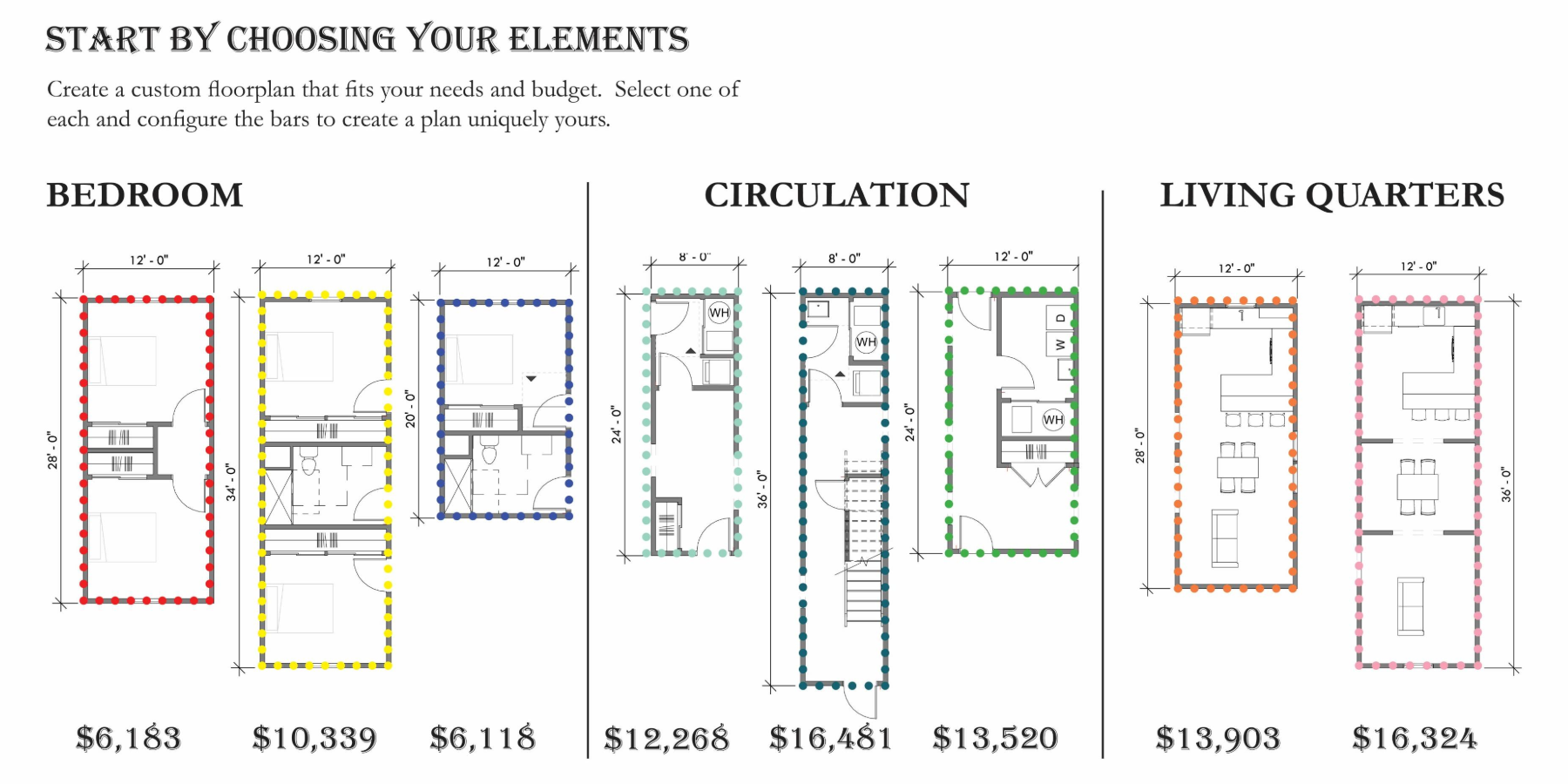
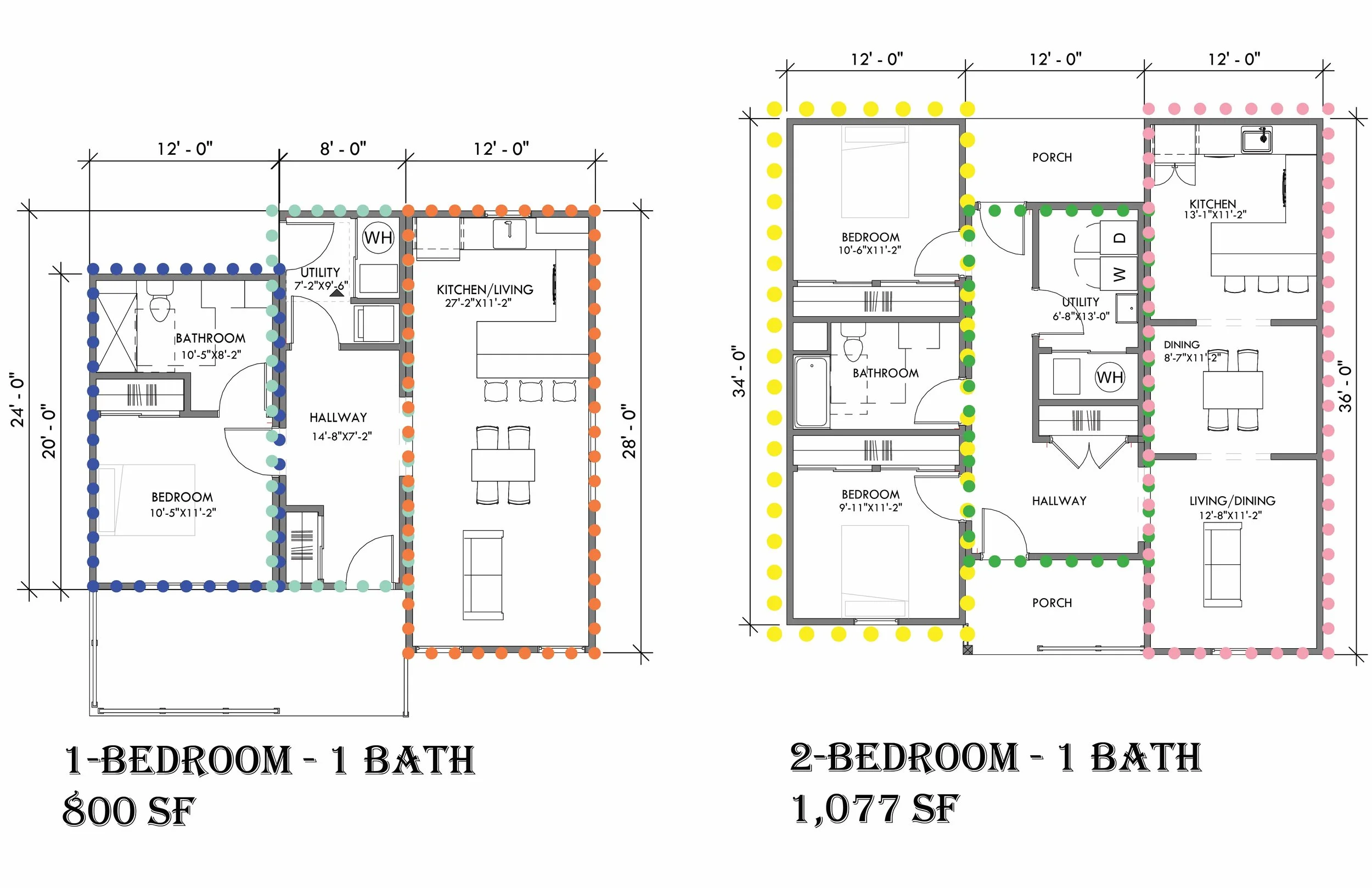
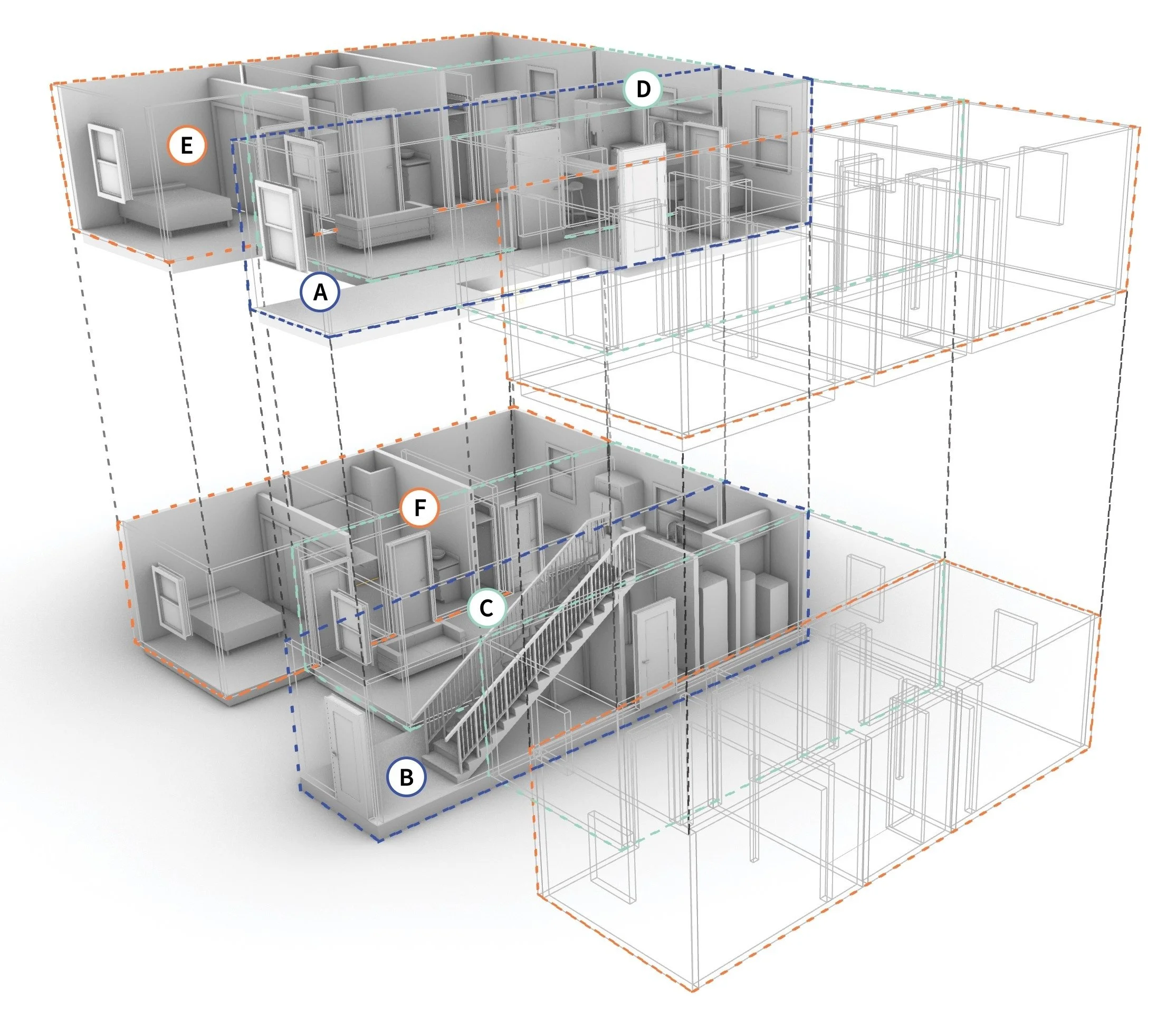
The design proposes a kit of modular residential components that can be combined to create one-bedroom, two-bedroom, or three-bedroom homes. The system allows residents to choose and configure living, bedroom, and circulation modules based on their current needs, budget, and life stage. Homes can remain compact or grow over time as families change, supporting long term stability and multigenerational living.
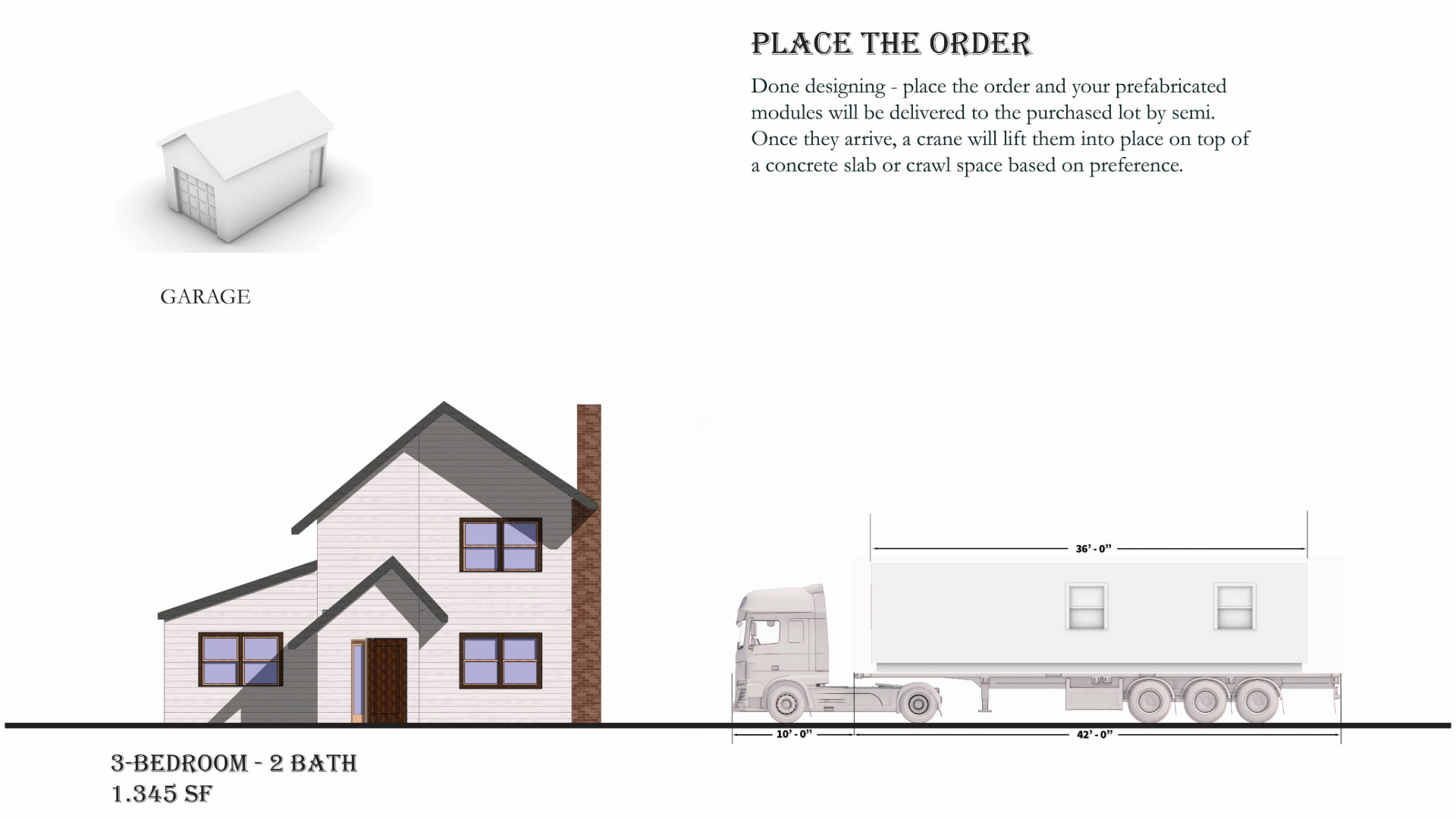
Modules are sized for efficient off-site fabrication and transportation, allowing for installation on slab-on-grade or crawl space foundations. The same system can be scaled from single family homes to duplexes and small multifamily buildings, making it adaptable for a range of neighborhood contexts and development goals.
Community Context
The competition site we picked is located on West American Street in Freeport, Illinois within walking and biking distance of downtown, schools, parks, medical facilities, and neighborhood amenities. The surrounding block includes a mix of single-family homes, duplexes, and vacant lots, making it well suited for reinvestment through infill housing rather than large scale redevelopment.
The design responds to the existing neighborhood character through simple forms, familiar rooflines, and residential materials. Porches, gables, garages, and other accessories can be added to create variation along the block and avoid a repetitive or standardized appearance.
Design Approach
The proposal draws inspiration from historic kit homes that once provided attainable housing across the Midwest, paired with contemporary modular construction methods. Unlike many prefab or tiny home models, the system prioritizes adaptability, accessibility, and compatibility with traditional neighborhood patterns.
Each module is designed with universal design principles in mind. Door widths, circulation clearances, and one-story configurations allow for accessibility without specialized construction. The layout flexibility allows residents to prioritize single level living or future expansion as needed.
Community Context
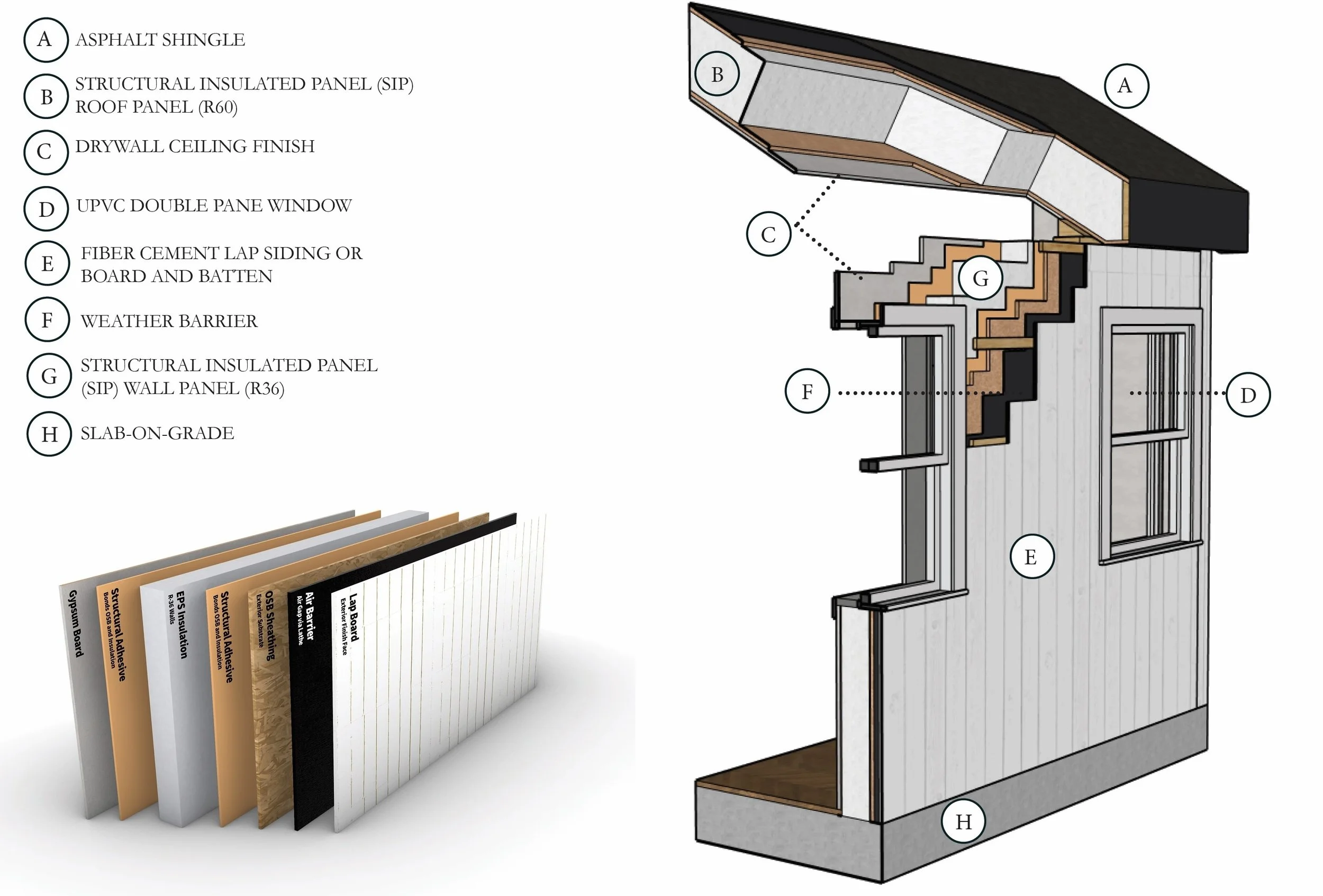
The modules are designed with passive performance principles using highly insulated exterior assemblies and airtight construction. Structural insulated panels are proposed for walls and roofs to improve energy efficiency, reduce construction time, and limit labor demands. Energy efficient appliances, lighting, and plumbing fixtures help reduce long term utility costs for homeowners.
Off-site fabrication improves quality control, minimizes waste, and shortens construction timelines. By pairing modular construction with infill development, the concept supports sustainability goals while making use of existing infrastructure and neighborhood streets.
Impact
Affordable, flexible housing is essential in rural and small city contexts where aging housing stock, limited development pressure, and economic constraints often leave few options for residents. This proposal demonstrates how thoughtful design and modular construction can support attainable homeownership, preserve neighborhood character, and strengthen community stability.